
The History of Cleethorpes: From Fishing Villages to Seaside Resort
How did Cleethorpes become the seaside town we know today? Discover its three original hamlets, Victorian railway boom, famous pier, Ross Castle and the Greenwich Meridian.
Visit Cleethorpes · 11 Oct 2026 · 8 min read
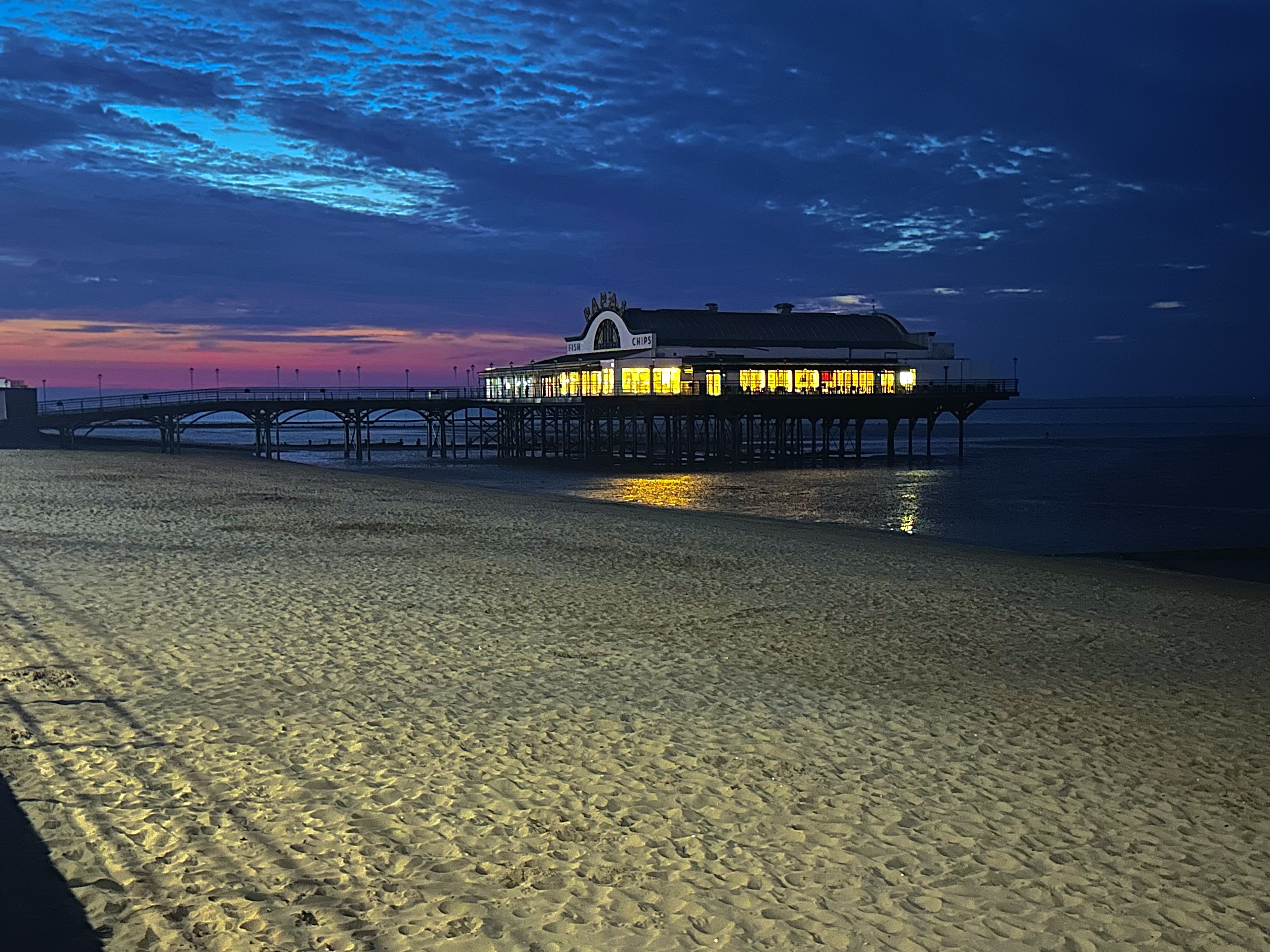
Walk along Cleethorpes seafront today and the town feels unmistakably like a traditional British seaside resort: the pier, the promenade, the gardens and the long stretch of coast. But its history begins long before the day-trippers and fish and chips.
Cleethorpes grew from small settlements on the Humber estuary into a fashionable place to take the sea air, before the arrival of the railway turned it into a thriving Victorian resort. Much of that story is still visible if you know where to look.
Before the seaside resort: three hamlets by the Humber
The town we now call Cleethorpes developed from Itterby, Oole (also written Hole) and Thrunscoe, small communities associated with the older parish of Clee. For centuries, life here was shaped by the estuary, farming, fishing and the nearby waterways.
You can still see traces of those original settlements in today's street layout. Sea View Street follows the old town street of Itterby, while Market Street occupies the area of Oole's former marketplace. The names have changed around them, but the town's geography carries its past.
The word thorpe has Scandinavian roots, often referring to a smaller or outlying settlement. The wider area's heritage reaches back much further than the Victorian buildings visitors recognise today.
For the detailed local account, see North East Lincolnshire Council's Central Cleethorpes conservation-area history and its Townscape Heritage Programme.
The 18th and early 19th centuries: people come for the sea air
Before trains brought crowds from inland, Cleethorpes was already attracting people interested in the supposed health benefits of visiting the coast. Sea bathing and "taking the waters" became fashionable, first among people with the means to travel.
The growing interest in seaside visits gradually changed the character of the small settlement. As the 19th century progressed, shops, lodging houses and visitor facilities followed. Cleethorpes was no longer simply a place where people lived and worked; it was becoming somewhere people went to relax.
The real transformation, however, was still to come.
1863: the railway changes everything
6 April 1863 was a landmark date: the railway was extended from Grimsby to Cleethorpes, providing a direct link to the seaside. Suddenly, day trips and holidays became practical for large numbers of people travelling from industrial towns.
Excursion trains brought visitors in numbers the old fishing communities could scarcely have imagined. The Grimsby and Cleethorpes Museum timeline records that around 10,000 people arrived by train on a single day in August 1863.
The railway company had every reason to help make Cleethorpes an attractive destination. More visitors meant more rail journeys, which encouraged investment in the pier, promenade, gardens and other amenities.
That connection between transport and tourism is one reason so many Cleethorpes landmarks date from the Victorian period.
You can still arrive right beside the sea at Cleethorpes Railway Station, just as generations of holidaymakers have done.
1873: Cleethorpes Pier opens
Cleethorpes Pier opened on 4 August 1873. It was originally much longer than the structure standing today, reaching out across the broad tidal shore.
Over the decades, the pier was a place for walks, entertainment and social occasions. It survived fires and significant changes, but one of the biggest alterations happened during the Second World War.
A section of the pier was removed to prevent its potential use during an invasion. The isolated seaward portion was later demolished, leaving the shorter pier visitors recognise today.
It's easy to take the present pier for granted, but it has witnessed more than 150 years of Cleethorpes holidays and changing seaside fashions.
For a detailed history and historic photographs, read the council's 150th-anniversary feature about Cleethorpes Pier.
1885: the promenade, Pier Gardens and Ross Castle
As Cleethorpes became busier, the coastline needed protecting from erosion. The railway company contributed to major work on the sea defences, promenade and public gardens.
One of the most distinctive results was Ross Castle, a stone folly built in 1885 into the rising ground above the promenade. Despite its romantic name and ruined-castle appearance, it's not a medieval fortress.
Historic England records that the structure was built for the Manchester, Sheffield and Lincolnshire Railway Company and named after the company's secretary, Edward Ross. The height of the folly's upper level is associated with the original clay cliffs that had been eroded before the promenade was established.
It's a wonderful reminder that Victorian resort-building mixed the practical with the decorative: defend the coast, create public gardens and add somewhere with a memorable view.
Visiting today: Pier Gardens and their approach paths are closed for major renovation. Works began in February 2026 and are expected to finish in 2027, so Ross Castle and the gardens cannot currently be explored via their usual paths. This history remains fascinating, but don't enter the fenced construction area. Follow the council's Pier Gardens regeneration update for the latest access information.
Read Historic England's official Ross Castle listing.
The Meridian: Cleethorpes and the world's longitude
There's another piece of geography that makes Cleethorpes unusual: the Greenwich Prime Meridian, zero degrees longitude, passes through the resort.
On Marine Walk in the southern seafront area, a marker shows where east meets west. The original stainless-steel pavement strip was installed in 1933; newer signage and a globe feature help make the spot a favourite for a seaside photograph.
It is free to visit and makes a satisfying destination for a stroll beyond the busiest part of the resort.
Find out more about the Cleethorpes Meridian marker.
The 20th century: entertainment, parks and family holidays
As holidays became accessible to more people, Cleethorpes continued to grow. The resort expanded southwards, with leisure grounds, green spaces and attractions giving families more reasons to return.
The Cleethorpes Boating Lake, opened in 1928 according to local green-space heritage research, became a recognisable leisure destination. Parks, gardens and the southern seafront developed alongside the town's homes and businesses.
A later chapter of the area's leisure history was Pleasure Island Family Theme Park, which opened in 1995 and subsequently closed. Its story is part of how the resort has continued to change with visitor habits and tastes.
Today, traditional seaside pleasures sit alongside new attractions, independent places to eat and year-round events. The scale of tourism has changed, but the enduring appeal is still the same: open skies, sea air and a day away from the everyday.
Explore the timeline of Cleethorpes' green spaces.
A Cleethorpes history walk you can do yourself
You don't need a museum ticket to get a feel for this history. Take a short walk through these points of interest:
- Start at Cleethorpes Railway Station - think about the holidaymakers arriving after 1863.
- Head to the Pier - opened in 1873, once much longer than it is today.
- Look towards Ross Castle from open public viewpoints, if visible - Pier Gardens and the approaches are currently closed for renovation; follow signposted routes around the works.
- Wander towards Sea View Street and Market Street - places associated with the old hamlets of Itterby and Oole.
- Extend the walk south towards the Boating Lake - where the later leisure landscape tells another part of the story.
For an extended route and more places to explore on foot, read our guide to the best walks in Cleethorpes and Grimsby.
A town worth looking at twice
Cleethorpes has never been just a pier and a beach. Its streets remember fishing communities; its station tells the story of mass tourism; its gardens and Ross Castle reflect Victorian ambition; and its seafront continues to adapt.
Next time you're walking along the prom, look beyond the familiar views. There's more than a century and a half of seaside history around almost every corner - and a much older local story beneath it.
Historical information reviewed October 2026. Key dates are supported by North East Lincolnshire Council, Historic England and local heritage records; individual historic accounts sometimes differ on smaller details.